Broken Key Extraction in Phoenix: What to Do When a Key Snaps in the Lock
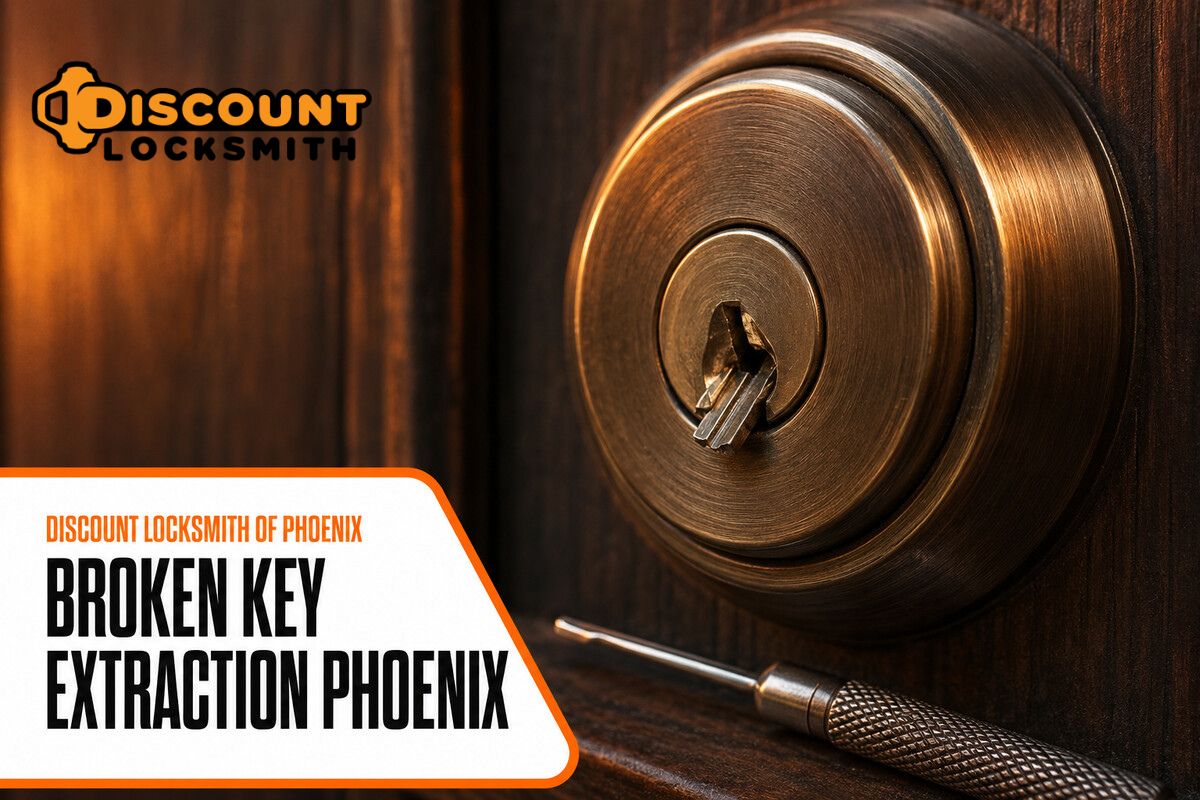
A key that snaps off inside a lock creates an immediate problem. The broken piece blocks the lock cylinder, making the door impossible to open or close until the fragment is removed. For residents and business owners across Phoenix and Cave Creek, this situation tends to happen at the worst times: early in the morning before work, late at night after a long day, or in the middle of an Arizona summer when temperatures push past 110 degrees and standing outside is not a comfortable option. Discount Locksmith of Cave Creek provides fast, professional broken key extraction throughout the Phoenix area, getting you back inside quickly without damaging your lock.
Why Keys Break Inside Locks
Keys break inside locks for several identifiable reasons, and understanding those reasons can help you prevent the problem in the future.
- Metal fatigue over time: Keys are typically made from brass or nickel silver. After years of repeated use, the metal develops micro-fractures along the blade that are invisible to the eye. One firm turn at the wrong angle causes the key to snap.
- A worn or stiff lock cylinder: When the internal components of a lock wear down or dry out, turning the key requires more force. That added force transfers stress directly to the key blade.
- Forcing a wrong key: Trying to use a similar but incorrect key, or inserting a key at a slight angle, puts uneven pressure on the blade and can cause it to shear off inside the cylinder.
- Temperature-related metal stress: Phoenix heat cycles cause metal to expand and contract repeatedly. This repeated movement accelerates wear on both keys and lock hardware.
- Previously damaged keys: A key that has already been bent, dropped repeatedly, or cut from a worn template is more likely to break under normal use.
Why You Should Call a Professional Instead of Attempting DIY Extraction
The instinct to grab a pair of needle-nose pliers or a bobby pin and try to pull the fragment out yourself is understandable, but this approach frequently causes additional damage. Lock cylinders contain small, precisely arranged pins and springs. Probing the cylinder with a tool that is too wide, too sharp, or inserted at the wrong angle can push the broken key fragment deeper into the cylinder, bend or dislodge internal pins, and scratch the cylinder walls in ways that affect how the lock operates afterward.
A licensed locksmith uses a set of dedicated broken key extractor tools, thin hooked picks designed specifically to grip and remove key fragments without disturbing the cylinder’s internal components. Our technicians at Discount Locksmith of Cave Creek work with these tools daily across a wide range of residential, commercial, and automotive lock types. In most cases, we remove the broken key and leave the lock fully functional in a single service call.
What the Broken Key Extraction Process Looks Like
When one of our technicians arrives at your location in Phoenix or Cave Creek, the process follows a consistent sequence that minimizes time and protects your lock.
- Assessment: The technician examines the lock and the position of the broken key fragment. This step determines which extraction tool fits the cylinder profile and how much of the key is protruding or recessed.
- Lubrication: A small amount of dry lubricant applied to the cylinder reduces friction and allows the extractor tool to slide alongside the key fragment without binding.
- Extraction: The extractor tool hooks onto the key’s teeth or the break point and pulls the fragment out in a controlled motion. For fragments seated deeply in the cylinder, a spiral extractor or long-nose pick may be used.
- Lock inspection: Once the fragment is out, the technician tests the lock with a functioning key to confirm the cylinder operates normally.
- Recommendations: If the lock shows signs of significant wear or the cylinder is damaged, the technician will advise you on whether a rekey or lock replacement makes sense before you leave.
When Extraction is Combined with Other Services
Broken key extraction often surfaces underlying issues that are worth addressing at the same appointment. If the key broke because the lock cylinder is worn, rekeying or replacing the lock at that point costs less than scheduling a second service visit later. If you have also lost access to a spare key, our technicians can cut a new key on-site using the extracted fragment as a reference or by reading the lock’s existing code. Combining these services during one call saves you both time and money.
For customers in Phoenix who are concerned about home security more broadly, this is also a practical time to evaluate your other entry points. Our team can inspect deadbolts, door hardware, and window locks during the same visit and provide specific recommendations based on what we observe.
Available Around the Clock in Phoenix and Cave Creek
Broken keys do not follow a schedule. Discount Locksmith of Cave Creek provides 24-hour broken key extraction service throughout Phoenix, Cave Creek, and surrounding communities. Our technicians carry the tools and hardware needed for residential, commercial, and automotive extractions on every service vehicle, so the work gets done during the initial visit.
We hold a 4.7-star rating across 532 Google reviews, and our pricing is straightforward with no hidden fees added after the job is complete.
Contact Discount Locksmith of Cave Creek Today
Frequently Asked Questions
How much does broken key extraction cost in Phoenix?
The cost of broken key extraction in the Phoenix area typically ranges from $50 to $150, depending on the lock type, the depth of the fragment, and the time of day the service is needed. After-hours or emergency calls may carry an additional fee. A technician can give you an exact quote once they assess the lock in person.
Can I still use my lock after a broken key is extracted?
In most cases, yes. If the cylinder sustained no damage during the break or the extraction process, the lock will function normally with a new key. If the cylinder shows wear or internal damage, a technician may recommend rekeying or replacing the lock to ensure it operates reliably going forward.
How long does broken key extraction usually take?
For a standard residential or commercial lock, extraction typically takes 10 to 30 minutes from the time a technician begins working on the cylinder. Automotive locks or heavily recessed fragments may take a bit longer. The condition of the lock and how far the fragment has traveled into the cylinder are the main factors that affect the total time.
Will my homeowner’s or renter’s insurance cover broken key extraction?
Some homeowner’s and renter’s insurance policies include a locksmith services rider or a lock coverage clause that may reimburse the cost. Check your policy documents or call your insurance provider before the service call so you know what documentation to request from the locksmith, such as an itemized receipt.
What should I do to prevent my key from breaking in the lock again?
Replacing your key every few years, especially if it shows visible bending or wear, reduces the risk of a future break. Having your lock cylinder lubricated once or twice a year with a dry lubricant also lowers the force needed to turn the key, which reduces stress on the blade. If your lock feels stiff or gritty during normal use, scheduling a service call sooner rather than later can catch cylinder wear before it causes a key to snap.
If a key has broken off in your lock, call us now at (480) 534-2771. We will dispatch a technician to your Phoenix or Cave Creek location and have you back inside as quickly as possible. You can also visit our website at discount-locksmith-phoenix.com to learn more about our full range of residential and commercial locksmith services.
Common Causes of Key Breakage and Prevention Tips
| Cause | Contributing Factor | Prevention Step |
|---|---|---|
| Metal fatigue | Years of repeated use create micro-fractures in brass or nickel silver | Replace keys every 3 to 5 years or at first sign of bending |
| Worn lock cylinder | Dry or worn internal components increase turning resistance | Lubricate the cylinder annually with a dry graphite lubricant |
| Wrong or misaligned key | Uneven blade pressure causes shearing at the insertion point | Confirm the correct key before applying turning force |
| Temperature stress | Phoenix heat cycles repeatedly expand and contract metal components | Inspect keys and locks each spring before peak heat season |
| Previously damaged keys | Bent or poorly cut keys carry existing stress fractures | Have a fresh key cut from the original, not from a worn copy |